The Mobile Lives of Green Iguanas in Japan
A YouTube video shows a small space with a concrete floor and grey stone walls. The person filming holds the camera in one hand while, drops a branch of moringa onto the floor with the other. Two green iguanas (Iguana iguana) immediately come over and begin to eat the protein-rich leaves (YouTube 2019).
The video was uploaded by an animal shelter on Okinawa’s remote Miyako Island. The founder, a real estate agent from Osaka, started the shelter in 2018 as a sanctuary for abandoned exotic pets. Japan is one of the largest importers of exotic animals. Many of these animals, including green iguanas, are legally bred in captivity in their native countries and brought into Japan by air. Other species are caught in the wild and laundered across the Japanese border, mainly from Southeast Asian countries. Japan’s border control intercepts only around a dozen of living animal cases each year. Because of the largely absent legislation inside Japan, wild-caught can be legally sold in the domestic market without restriction, effectively laundering smuggled animals into legal trade (TRAFFIC 2020). Exotic animals are displayed in zoos or included in one of the exotic animal cafés that Japan increasingly has (Sigaud, Kitade, and Sarabian 2023). Yet most exotic animals are kept as private pets in Japan’s urban areas.
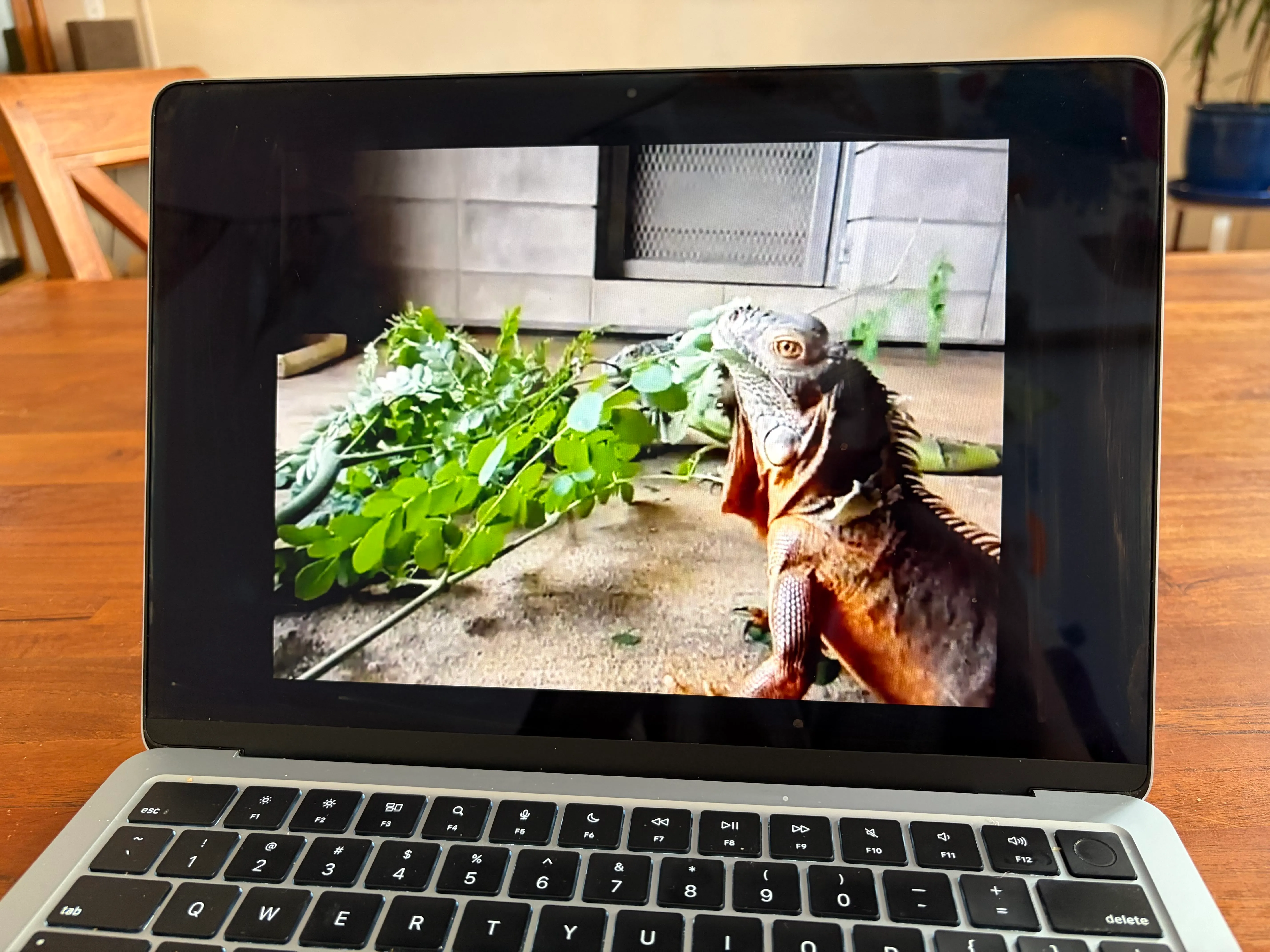
Green iguanas eating moringa · Copyright © Sarah Clay 2026
Iguanas are among the most popular pet reptiles in and outside Japan, but also a species that is frequently abandoned. Most individual animals are bought at a few months old, typically 25–35 cm in size. Iguanas grow rapidly and can reach up to two meters. When their owners no longer have the capacity or willingness to care for them, the animals are often released outdoors, despite having been bred in captivity and having no prior experience of the outside world. Originally funded with his own money, the founder of the shelter in Miyako decided to create a space on one of Japan’s remote subtropical islands where these and other abandoned pets could spend the rest of their days in safety and peace (Shimizu Masashiro, interview on September 16, 2022).
Roughly 130 km west of Miyako-jima on its neighboring Ishigaki Island, green iguanas are embedded in a very different set of socio-ecological relationships. Ishigaki is one of only a few places outside Central and South America where green iguanas have established a wild population. There, they are labeled “high risk” and seen as a threat to local ecosystems, endemic animals, and native and agricultural plants. Rather than caring for the animals, the local government wishes to eradicate the population. The green iguana is designated a ‘species requiring caution’ (yōchūi gairai seibutsu) under Japan’s Invasive Alien Species Act and explicitly not labeled as a ‘specified invasive species’ (tokutei gairai seibutsu)(Ministry of the Environment, Kyushu Regional Environment Office 2013). This means there is no special permit requirement blocking private capture or killing, and that ordinary residents and hobbyists from outside can catch and dispose of iguanas without government authorization.
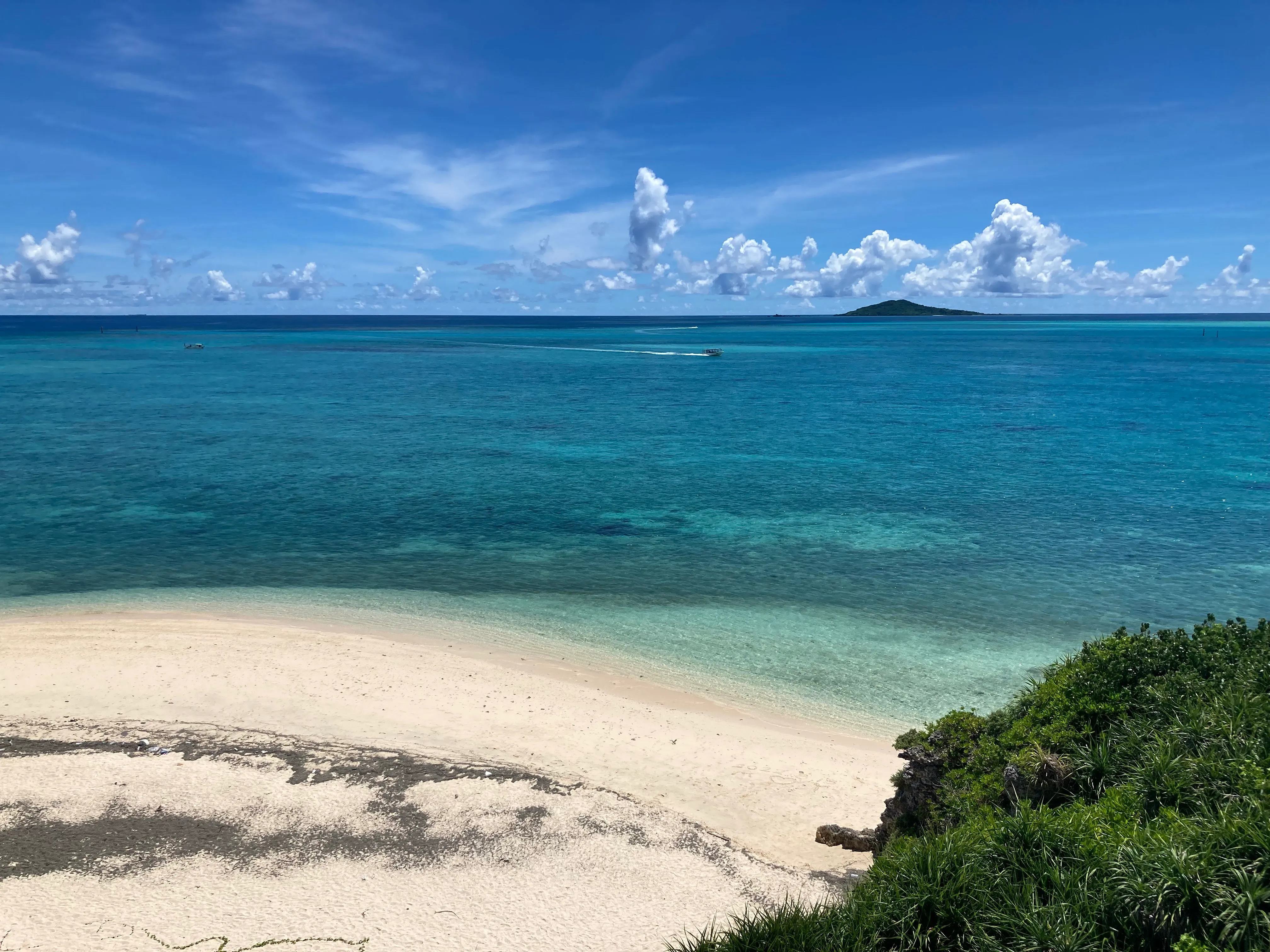
Miyako Island · Copyright © Sarah Clay 2022
There are no official numbers on how many iguanas are killed on Ishigaki each year. Yet there is a public acknowledgment that killing is happening at scale. On 31 January 2025, the Ishigaki Nature Conservation Office of the Ministry of the Environment held a memorial ceremony (kuyō) for iguana’s and other invasive animals to mourn the lives of those who got killed (Okinawa Times 2025). According to Barbara Ambros, kuyō is meant to honor the spirits of the dead and to contribute to a better afterlife for them (Ambros 2012, 6). This illustrates that, when it comes to Ishigaki’s green iguanas, care and killing are not opposites. Rather, they are co-produced by the people and governmental institutions who engage with the animals. The Ministry of the Environment’s legal categorization, for instance, enables and disperses killing beyond its own oversight, while the same office later stages a ritual of mourning for exactly those deaths, formalizing care for lives it structurally declined to protect.
This awkward relationship between killing and care is also visible online, where I found many photographs of (mainly) men proudly holding a massive green iguana in their arms. One is a 40-year-old biologist from Nagasaki Prefecture who wrote a blog post in July 2025 about his lifelong interest in iguanas. The post opens with a photograph of the writer kneeling on a beach, holding a green iguana up in the air, staring at the animal with his mouth half-open in awe. He describes being completely captivated by the animal’s beauty: “The massive, muscular body, and the crest standing up sharp like a helmet ornament, had a splendor you would not see in individuals kept on display at zoos” (blog post, July 2025, anonymized). I understood what he meant. A photograph accompanying the text showed the caught individual’s bright green, brown, and grey scales forming beautiful patterns across its head. The animals’ eyes were almond-shaped and gazed intriguingly into the camera. Along its chin and down its back ran a row of spikes, as if it were a dragon.
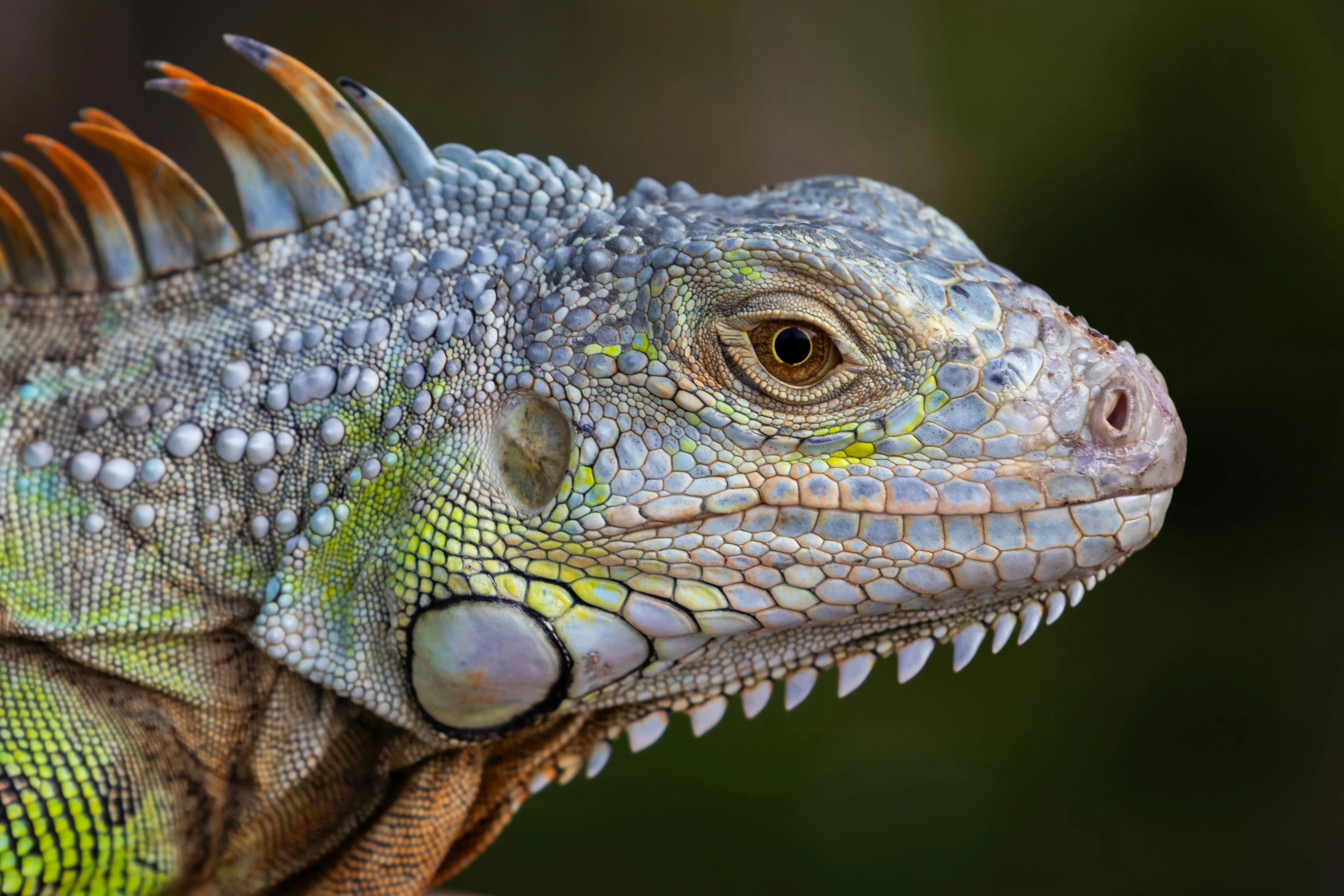
Green iguana · Copyright © Sameer Srivastava via Unsplash
The next photograph showed the iguana’s deep-fried feet: after catching it, the blogger decided to eat it. “This animal tastes so good that it is commonly eaten in its native country. I marinated it in soy sauce and made it into tatsuta-age. It was outstanding. I mainly ate the meat-rich limbs and head, which were juicy yet had a rich texture. If I had to compare it to something, the flavor was like a cross between free-range chicken thigh and pork spareribs” (blog post, July 2025, anonymized).
Tracing the mobility trajectory of the green iguana, from south and central America into Japan and further to the Okinawan islands, helps us understand how human relationship to the animal changes as it moves. Iguanas are born as produced and designed commodities within breeding facilities, largely shaped by social media influencers (“petfluencers”) in the present day. The animals in urban Japan as a source of healing (iyashi) (Sigaud, Kitade, and Sarabian 2023), but quickly become a problem in the context of urban Japan’s housing situation. Since large individuals are difficult to sell, they often end up released into natural environments as an attempt of decommodification (Collard 2020). Eventually, on Ishigaki, iguanas have turned into a self-reproducing population existing largely outside market relations. Here, they are valued as a tourist curiosity and a source of informal food, and, at the same time, devalued as an environmental risk. In this sense, the iguana’s mobility does not simply move a body across space; it repeatedly resituates that body within different relationships of value and care.
References
Ambros, Barbara R. Bones of Contention: Animals and Religion in Contemporary Japan. Honolulu: University of Hawai’i Press, 2012.
Collard, Rosemary-Claire. Animal Traffic: Lively Capital in the Global Exotic Pet Trade. Durham: Duke University Press, 2020.
[anonymized weblog]. “Ikimono Ritō Kikō: Ishigaki-jima no Gurīn Iguana (Okinawa-ken)” [Creature Island Travelogue: The Green Iguana of Ishigaki Island (Okinawa Prefecture)]. Shima e. Onrain (note.com), July 17, 2025.
[Anonymized channel]. “Moringa o Taberu Iguana (Iguana iguana)” [Iguana’s Eating Moringa]. YouTube, June 22, 2019.
Ministry of the Environment, Kyushu Regional Environment Office. “Hōdō Happyō: Ishigaki-shi Sakieda de no Yōchūi Gairai Seibutsu Gurīn Iguana no Hokaku ni Tsuite” [Press Release: On the Capture of the Caution-Requiring Invasive Species Green Iguana in Sakieda, Ishigaki City]. Okinawa-Amami Nature Conservation Office. Accessed August 4, 2026. ++https://kyushu.env.go.jp/okinawa/pre_2013/0227a.html++.
Okinawa Times. “Iguana, Kujaku, Ano ‘Kyōi no Zassō’ mo: Kujo Sareta Gairai Seibutsu no Kuyōshiki, Okinawa Ishigaki-jima de Hatsu Kaisai, ‘Kichō na Inochi Wasurenai’” [Iguanas, Peacocks, and Even That “Threatening Weed”: Memorial Service for Exterminated Invasive Species Held for the First Time on Okinawa’s Ishigaki Island, “We Won’t Forget These Precious Lives”]. February 9, 2025. ++https://www.okinawatimes.co.jp/articles/-/1522959++.
Shimizu, Masahiro (pseudonym). Interview by author. September 16, 2022.
Sigaud, Marie, Tomomi Kitade, and Cécile Sarabian. “Exotic Animal Cafés in Japan: A New Fashion with Potential Implications for Biodiversity, Global Health, and Animal Welfare.” Conservation Science and Practice 5, no. 2 (2023): e12867.
TRAFFIC. Crossing the Red Line: Japan’s Exotic Pet Trade. 2020. ++https://www.traffic.org/publications/reports/crossing-the-red-line/++.